
Tools and guidance to prepare your legacy with confidence
Free, practical resources to help you understand estate planning and organize what matters, at your own pace.
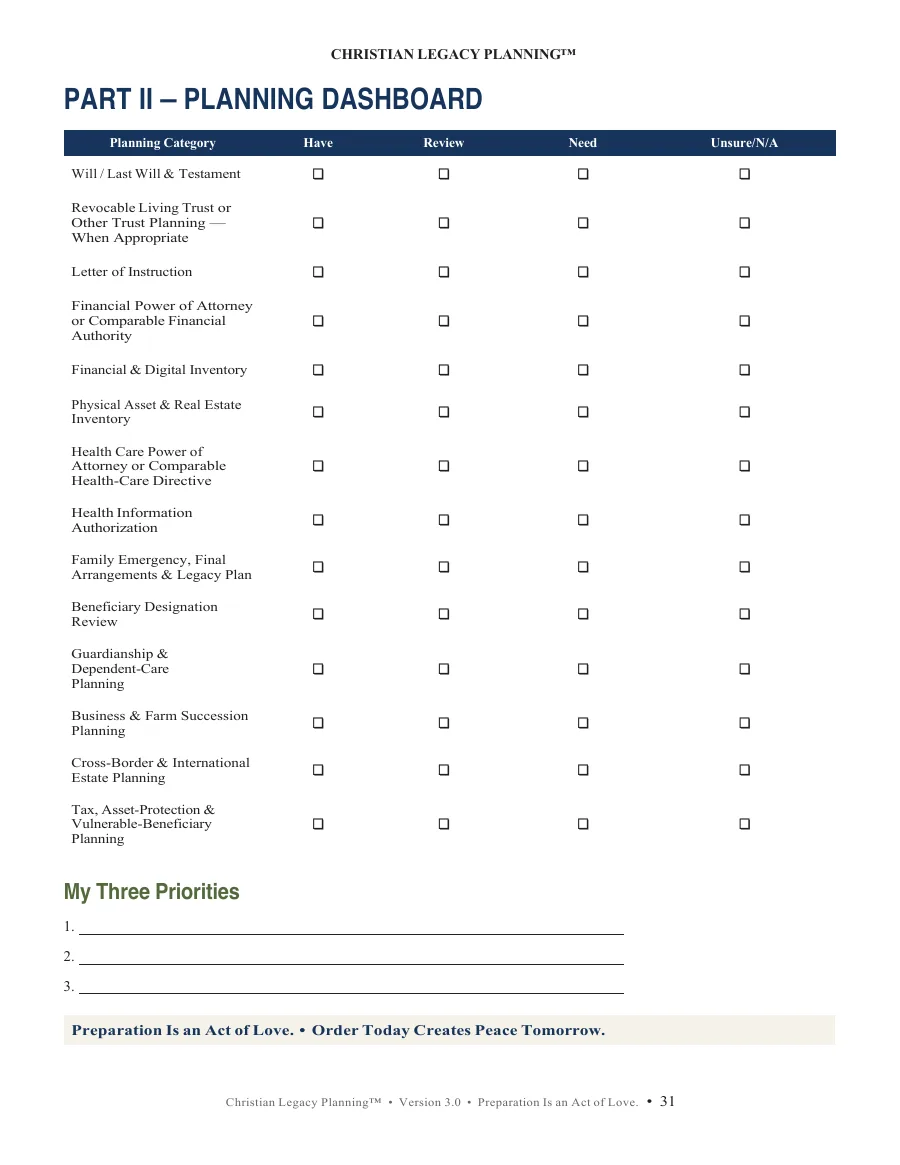
Start your legacy planning journey today. Download the Christian Legacy Planning™ Dashboard.
Download PDF · 2 pagesSee where you stand in minutes
Free, private tools to see how ready your plan is and what your giving could look like. Nothing you enter leaves your browser.
How prepared is your family?
Answer 12 quick questions for a personalized readiness score.
0 of 12 answeredPicture your legacy
Estimate your estate and see how a planned gift could support your church or the ministries you love.
For illustration only. This is not legal, tax or financial advice, and it does not include estate taxes, fees or the laws of your jurisdiction.
Learn about Kingdom givingThe Legacy Checklist
0 of 22 complete. Progress is saved in this browser.
Essential documents
Accounts & beneficiaries
Property & possessions
Digital life
Faith & family legacy
Estate planning essentials

Stewardship beyond giving: managing faithfully what remains
Many believers are taught how to give, but not how to wisely manage and pass on what remains. Here is a framework for faithful stewardship across a lifetime.
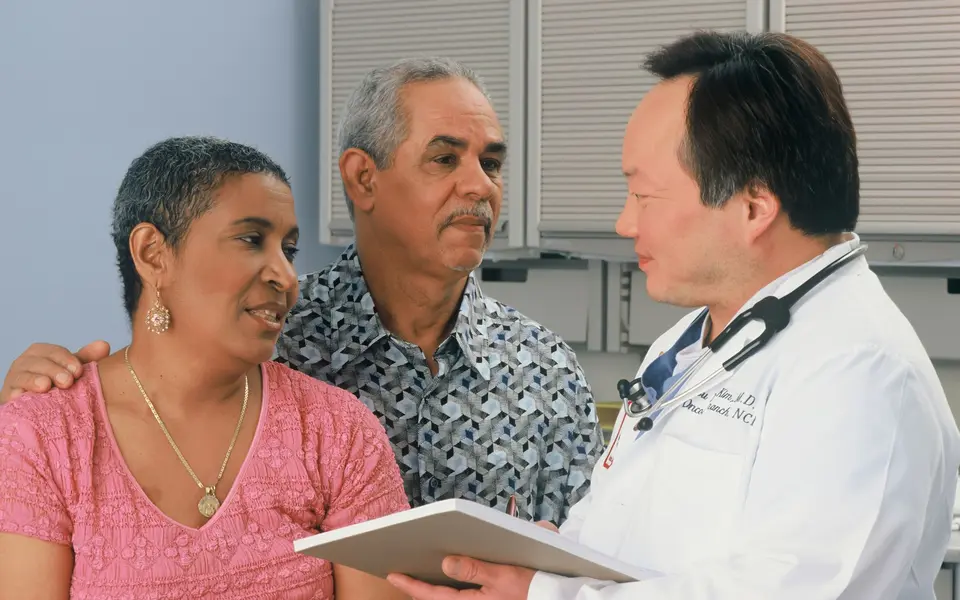
When families don’t know: lessons from a hospital waiting room
Grace’s family discovered, in the hardest moment, that they did not know her mother’s final wishes. What every family can learn from that experience.

Will or living trust? A plain-language comparison
Both are tools to transfer what you own. Understanding the differences helps you have a more productive meeting with your attorney.
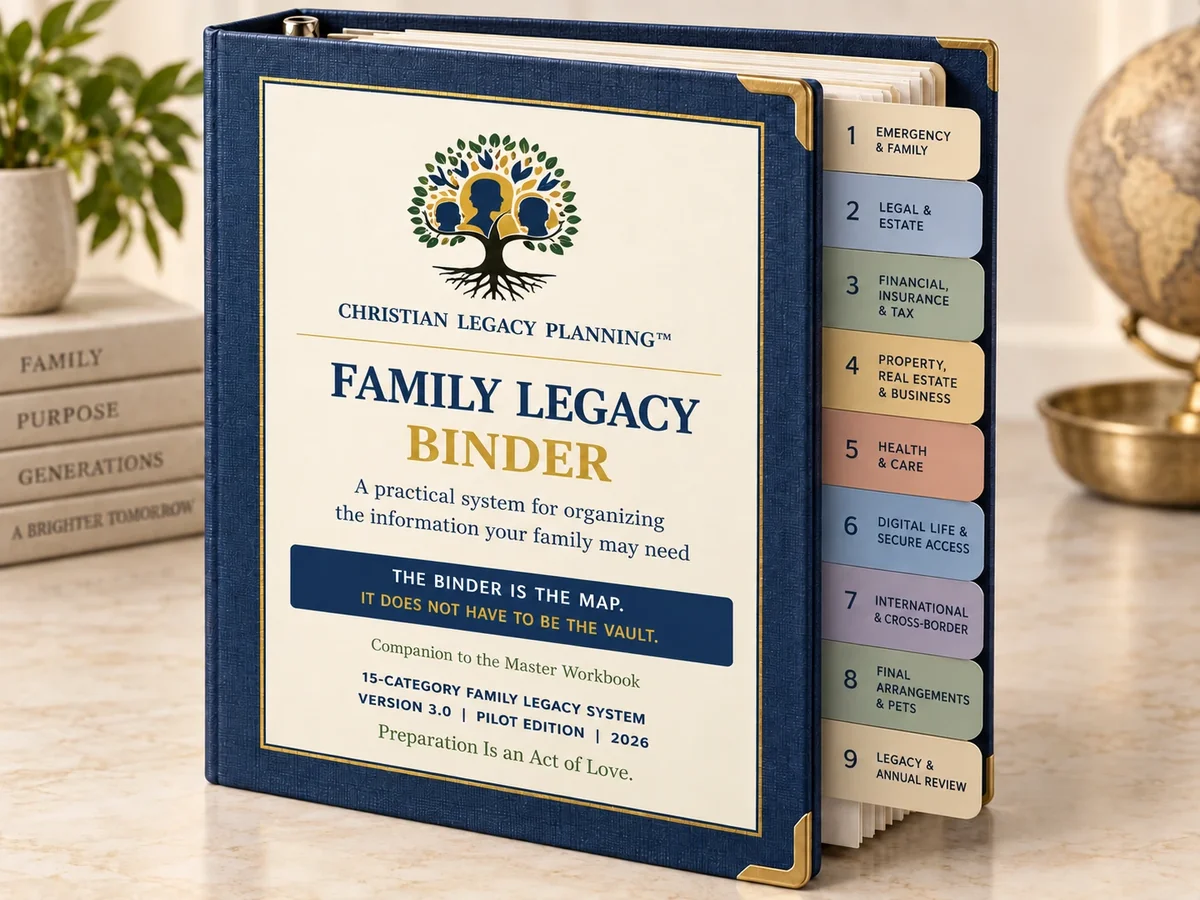
Building your Legacy Binder: what to include
A single, secure place for the information your family will need. Here is the checklist we use with every client.

Leaving a legacy gift to your church or ministry
A legacy gift can extend your generosity for generations. Simple ways to include the Kingdom in your plan.

Planning when your family spans more than one country
Property in Jamaica, children in Toronto, retirement in Texas? Cross-border families face extra questions. Here is where to begin.
Grounded in the Word
“A good man leaveth an inheritance to his children’s children.”Proverbs 13:22 (KJV)
“Moreover it is required in stewards, that a man be found faithful.”1 Corinthians 4:2 (KJV)
“For which of you, intending to build a tower, sitteth not down first, and counteth the cost?”Luke 14:28 (KJV)
“The thoughts of the diligent tend only to plenteousness.”Proverbs 21:5 (KJV)
“As every man hath received the gift, even so minister the same one to another, as good stewards of the manifold grace of God.”1 Peter 4:10 (KJV)
“One generation shall praise thy works to another, and shall declare thy mighty acts.”Psalm 145:4 (KJV)
Estate planning terms, in plain language
- Beneficiary
- A person or organization named to receive assets from a will, trust, insurance policy or account.
- Executor / Personal representative
- The person named in a will to settle the estate, pay debts and distribute assets.
- Probate
- The court-supervised process of validating a will and settling an estate.
- Revocable living trust
- A trust you control during life that can hold assets and pass them to beneficiaries, often outside probate.
- Trustee
- The person or institution responsible for managing assets held in a trust.
- Power of attorney
- A document authorizing someone to act on your behalf for financial or legal matters.
- Advance directive
- Written instructions about the medical care you want if you cannot speak for yourself.
- Healthcare proxy
- The person you appoint to make medical decisions if you are unable to.
- Intestate
- Dying without a valid will; state or national law then decides who inherits.
- Ethical will
- A non-legal letter passing on values, faith, life lessons and blessings to future generations.
- Donor-advised fund
- A charitable giving account that lets you contribute now and recommend grants over time.
- Payable-on-death (POD)
- A designation allowing a bank account to pass directly to a named person at death.
Questions families ask us
Don’t see yours? We’re glad to talk it through, and there’s no cost to ask.
Ask a question